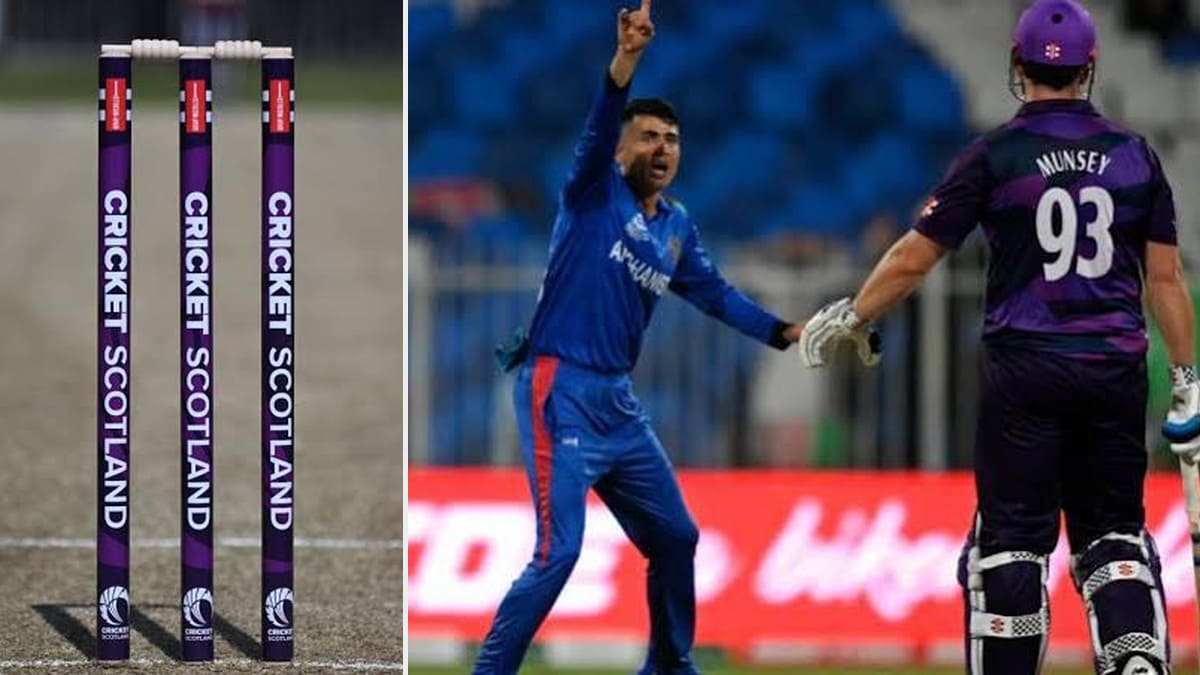
Cricket Scotland has confirmed it will not schedule bilateral international matches against Afghanistan outside International Cricket Council (ICC) competitions.
The decision, announced on November 10, 2026, reflects concerns about the treatment of women and girls under Afghanistan’s Taliban-led government.
However, Scotland has not announced a complete boycott of Afghanistan at ICC tournaments.
Why Has Scotland Taken This Decision?
Cricket Scotland cited restrictions affecting women’s participation in sport, education and employment in Afghanistan.
Since the Taliban returned to power in August 2021, opportunities for women and girls to participate in organized sport have been severely restricted.
The Scottish cricket governing body said its position reflects its commitment to equality and participation in cricket.
The decision follows similar restrictions introduced by Cricket Australia and the England and Wales Cricket Board.
Will Scotland Play Afghanistan in ICC Events?
The decision applies to bilateral cricket fixtures, not automatically to matches organized as part of ICC tournaments.
This means Scotland and Afghanistan could still face each other in competitions such as the ICC Men’s T20 World Cup, depending on tournament fixtures and ICC regulations.
Scotland last played Afghanistan in a full international match during the 2021 T20 World Cup.
Will Cricket Scotland Review Its Decision?
Cricket Scotland intends to review its policy annually or if significant changes occur in Afghanistan or within ICC policy.
The governing body has also addressed questions surrounding player participation in Afghanistan-related cricket competitions.
Any involvement by individual players would be considered separately from the national governing body’s position on bilateral fixtures.
For now, Scotland will not arrange a bilateral international series against Afghanistan.
What Does This Mean for International Cricket?
The decision adds to growing scrutiny of Afghanistan’s participation in international cricket while women’s cricket remains restricted in the country.
It also highlights the differing responsibilities of national cricket boards and the ICC when responding to human rights concerns.
Scotland’s announcement does not change Afghanistan’s ICC membership or prevent the teams from meeting in ICC competitions.