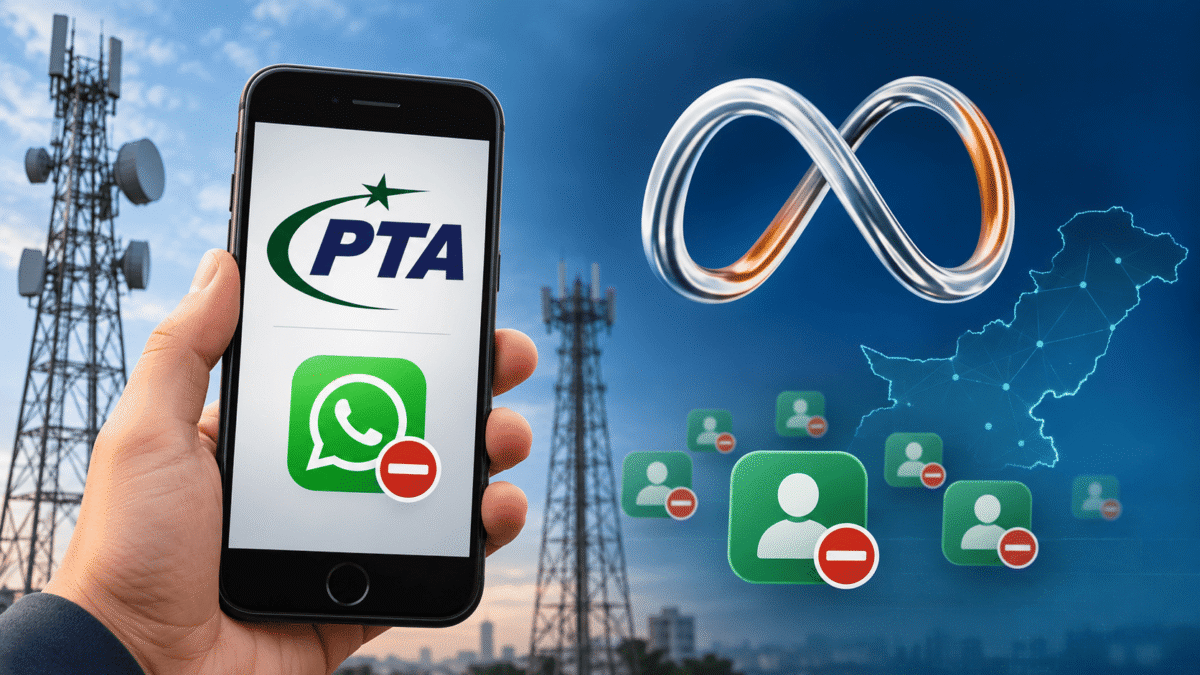
The Pakistan Telecommunication Authority (PTA) and Meta have blocked approximately 176,000 WhatsApp accounts linked to recycled mobile numbers in an effort to prevent online fraud and protect mobile users.
The action, reported on November 6, 2026, targets WhatsApp accounts associated with inactive, cancelled or reassigned SIM numbers.
Authorities say these numbers can create security risks when an old WhatsApp account remains associated with a phone number that is no longer controlled by its previous owner.
Why Were 176,000 WhatsApp Accounts Blocked?
The accounts were blocked following concerns about the misuse of recycled mobile numbers.
A recycled SIM number is a phone number that was previously assigned to one customer but has later been returned to a telecom company and issued to another person.
For example, someone may stop using a mobile number for several months. If the operator eventually reassigns that number, its new owner may attempt to register it on WhatsApp.
This can create confusion or security risks if the previous owner’s account was not properly removed or transferred.
However, receiving a recycled number does not automatically give its new owner access to the previous user’s old messages. WhatsApp registration and message protection involve additional security measures.
How Many Recycled SIM Numbers Are in Pakistan?
According to officials cited in media reports, Pakistani telecom operators hold approximately 16 million recycled mobile numbers.
PTA has shared details of around 10 million such numbers with Meta to identify associated WhatsApp accounts.
The regulator and Meta have also agreed to an ongoing process under which information about 5,000 recycled numbers will be shared each month.
Accounts identified through this process may be deactivated in phases to reduce misuse.
Could Your WhatsApp Account Be Affected?
The development is particularly relevant to people who have stopped using the SIM number registered with their WhatsApp account.
If your WhatsApp still uses a number that you no longer own, you could face problems recovering or verifying your account.
If a new subscriber receives that number, they may be able to register it using a verification code delivered to the active SIM.
WhatsApp has safeguards for recycled numbers, but users should not depend on those protections instead of keeping their account information updated.
How to Protect Your WhatsApp Account
There are several practical steps you can take.
1. Keep your registered number active
Make sure you still control the number associated with your WhatsApp account.
2. Update WhatsApp when changing numbers
If you permanently change your SIM number, use WhatsApp’s Change Number feature to move your account to the new number.
3. Enable two-step verification
Open WhatsApp Settings, go to Account and enable two-step verification. Add a recovery email address where supported.
4. Never share verification codes
Do not send your WhatsApp registration code to another person, even if they claim to represent customer support.
5. Secure your account if you lose access
If someone registers your number without permission, follow WhatsApp’s official account recovery instructions.
Does This Mean WhatsApp Is Being Banned in Pakistan?
No. The reported action concerns specific accounts associated with recycled mobile numbers, not a nationwide WhatsApp ban.
The purpose is to reduce fraud and misuse involving phone numbers that have been deactivated or reassigned.
For ordinary WhatsApp users, the most important precaution is to maintain control of their registered mobile number and keep their account security settings updated.