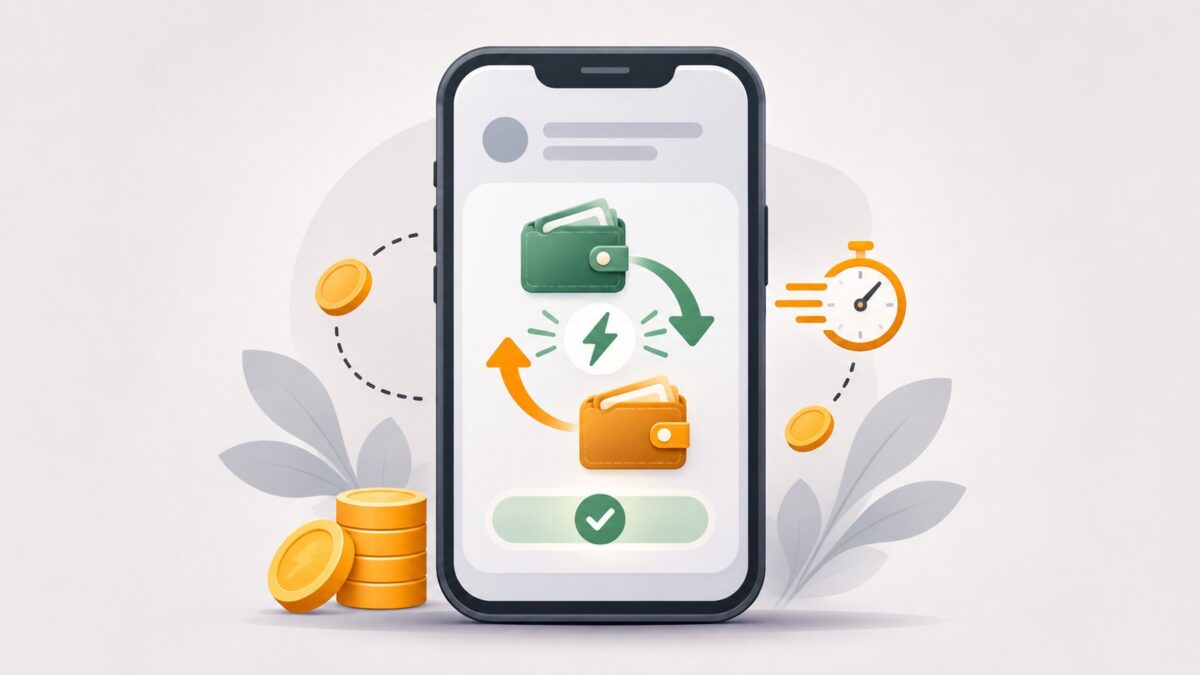
Sending money used to mean remembering an account number or visiting a branch. Raast, Pakistan’s instant-payment infrastructure, was built to support fast digital payments between participating financial institutions. The State Bank of Pakistan (SBP) describes it as a system supporting individuals, businesses and government payments.
Raast is not a separate bank account. It is payment infrastructure accessed through participating banks and payment providers, usually from the same banking app you already use.
What is a Raast ID?
For person-to-person payments, a Raast ID can be a mobile number linked to an eligible financial account. Instead of providing a long IBAN to someone paying you, you can share the linked number. The sender’s bank uses that ID to route the transfer.
According to SBP’s guidance, a person can link one Raast ID to one account at a time. You can still transfer funds using an IBAN without creating your own Raast ID, where supported by the participating provider.
How to send a Raast payment
The labels vary by bank, but the typical process is:
- Open your bank or payment provider’s official app and sign in.
- Find Raast or the instant transfer option.
- Enter a recipient’s registered Raast ID or supported IBAN.
- Check the displayed recipient information carefully before continuing.
- Enter the amount, confirm the transfer and keep the receipt or transaction reference.
If the recipient information looks wrong, stop rather than guessing. For mistakes or suspicious transactions, contact your bank using its official customer-support channel.
Is Raast free?
SBP’s published person-to-person FAQ says Raast transactions are offered without charges. However, product features, limits and eligibility can depend on your bank and the applicable service. Check your provider’s current terms before sending a large transfer.
SBP also says that Raast P2P operates for domestic transfers, not international remittances. Don’t confuse an instant local transfer with a cross-border payment service.
Raast ID versus IBAN: which should you use?
A Raast ID is convenient when the recipient has linked a phone number. An IBAN identifies a bank account more directly and can also be used in supported Raast transfers. Neither option eliminates the need to verify the recipient and amount.
Example (illustrative only): A student pays a roommate PKR 1,500. The roommate shares a registered Raast ID, and the student confirms the recipient details in the banking app before sending. This is a hypothetical scenario, not a claim about a specific bank’s interface.
Can shops accept Raast payments?
Yes. SBP also describes a person-to-merchant service with payment modes including merchant aliases, IBANs and static or dynamic QR codes. Availability and the steps shown to customers vary with the payment provider and merchant setup.
Stay safe when paying
- Never share your bank password, PIN or one-time verification code with a caller or chat contact.
- Do not assume a screenshot proves someone has sent you money. Confirm a credit in your own account.
- Use the bank’s official app or website rather than links sent by strangers.
- Verify the amount and recipient before pressing confirm.
- Contact your provider promptly if a transfer appears incorrect or unauthorized.
The takeaway
Raast is designed to make Pakistani digital payments more convenient. Learn how your own provider handles IDs, transfers and limits; then treat every payment confirmation as a step worth checking carefully.